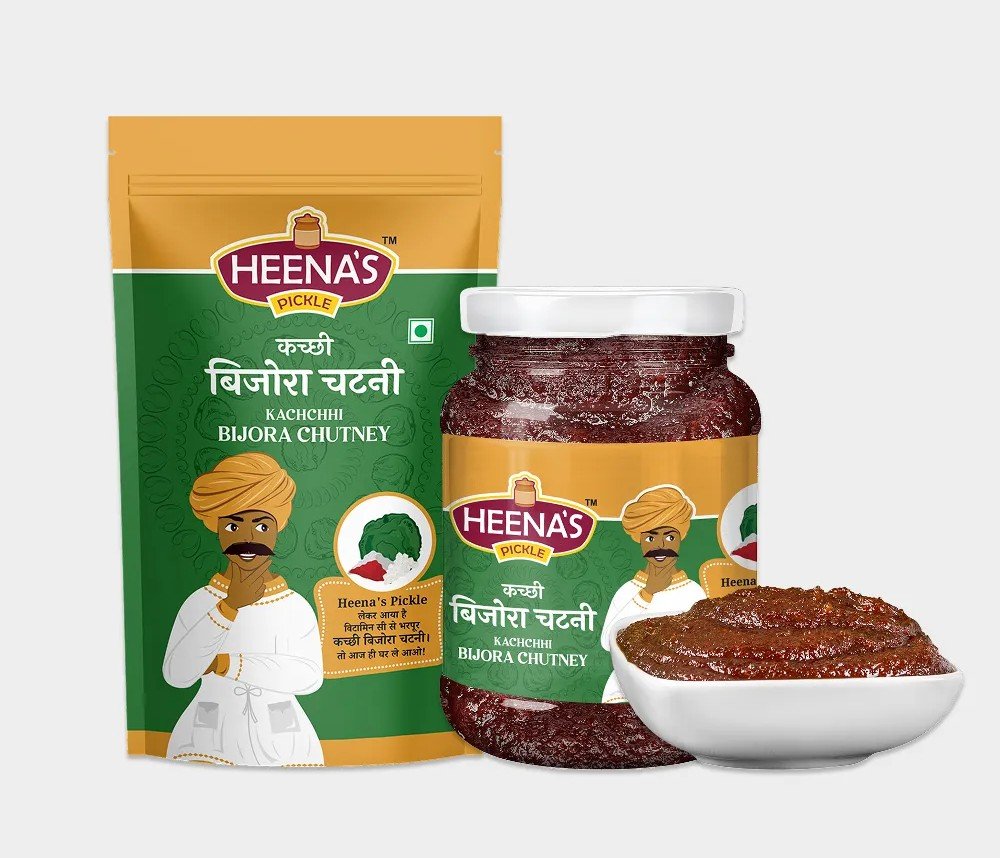
A Kutch family's mission to save the bijora plant has become a pickle brand
Business can have more than profit as a goal. In Patri village of Mundra taluka in Kutch, one family started a business with a mission: to save a plant called bijora. Their brand, Heena's, makes a rare pickle where taste and health meet.
About 30 years ago, Rajanbhai Dharod's grandfather began making pickle. Rajanbhai says bijora is rich in vitamin C and good for stomach troubles. Many places know it as bijoru lemon. It is a large fruit, and some weigh a kilo or more. It was once common in Kutch, but its cultivation has fallen. Heena's decided to bring it back by encouraging farmers to plant bijora, and the company has given farmers about 4,000 saplings so far.
The family tradition goes back further. Rajanbhai's grandfather, Bhavanjibhai Dharod, ran a small provision store, and his grandmother, Hemkunvarben, was a master of pickle recipes. At the request of customers, they began making bijora pickle. After his father Rameshbhai and uncle Harishbhai passed away, the family faced a financial crisis and Rajanbhai took over the business. The brand takes its name from his aunt Heenaben, who now lives in Mumbai and is the brand's distributor there.
The pickle is made in the traditional desi way. The bijora is cut into three parts: the peel, the pulp and the juice. All three are used. A special cutting system keeps the natural elements. The pieces are dried in the sun for days, then the pickle is made. Only high-quality jaggery is used, not sugar. No preservatives, colours or flavours are added, and no extra oil is used. The company says the natural colour of the pickle is its own.
Heena's makes 18 types of pickle, and about 80 percent of its production is bijora pickle: 25,000 kg. It also makes bijora chhundo, bijora gravy and bijora masala athanu. The packs come in 200 g and 500 g pouches. Production uses modern machinery, but the recipe is traditional. The company has no consultant. Heena's has worked on it by itself, and builds each recipe from experience.
The bijora season is August and September. The company makes the whole year's stock in that period. It pays farmers a high price for bijora, helps with the cost of farming, and has also raised saplings itself.
Bijora's benefits, as the company explains them: it speeds up metabolism and helps with weight loss, gives relief from pain and breathing problems, strengthens immunity, and may help with stones. The brand is now planning bijora candy, bijora jelly and bijora juice. Sales have grown in Gujarat, and the company is building a B2B network too.