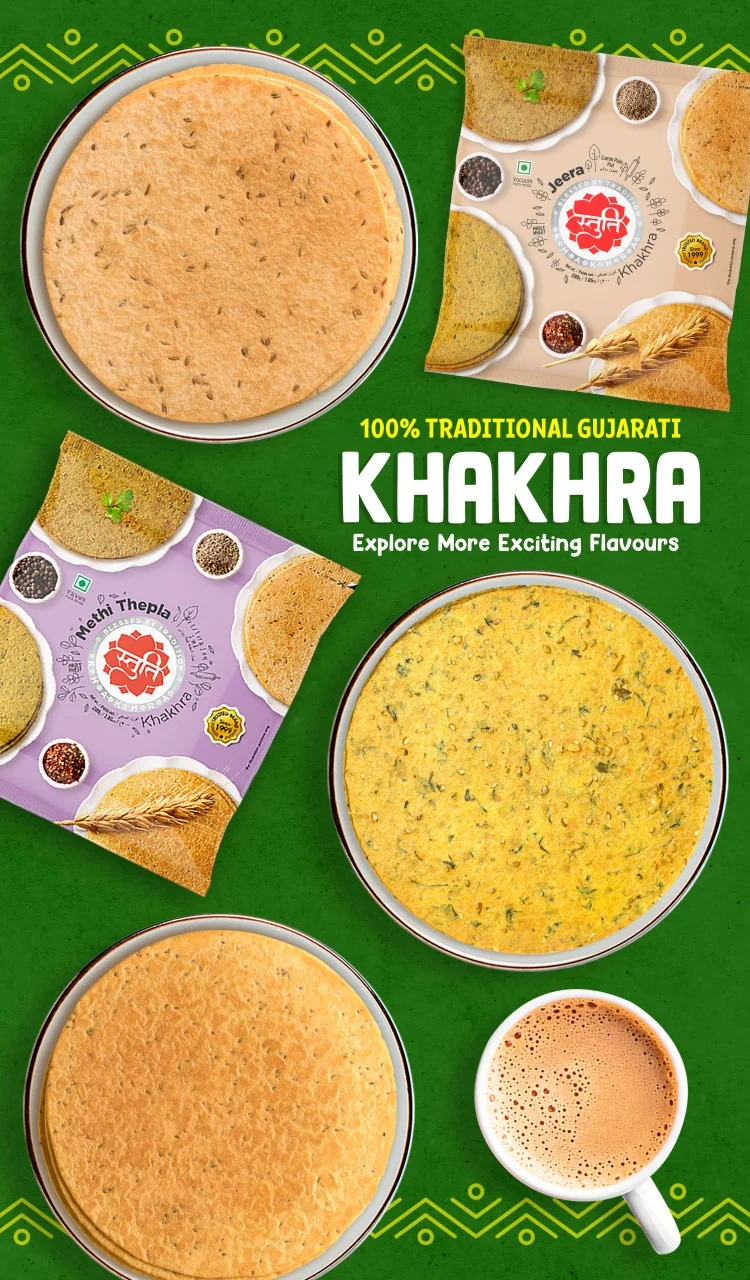
Yogeshbhai Patel's home-kitchen khakhra business has grown into a brand with over 100 varieties
Surat is known for its food, and Stuti has added to that fame. Founded in 1999 by Yogeshbhai Patel, Stuti Khakhra Pvt. Ltd. now makes more than 100 types of khakhra, over 10 types of chakri, and soya sticks. The brand is named after his daughter, Stuti.
Yogeshbhai is originally from Limbdi in Saurashtra, but he was born in Surat. After his B.Com, he worked as an accountant at a well-known flour mill company. Then he started trading in khakhra, bringing it from Ahmedabad and Mumbai. Demand was good, but the quality was not always what customers wanted, so he decided to make his own. His mother, Champaben, started the khakhra business at home, and Yogeshbhai joined her. Later the business became a private limited company.
At first the khakhra was handmade. As demand grew, the company moved to machine production, and it has researched and developed its own khakhra machines. Customers who still wanted handmade khakhra were not ignored, and both kinds are made today.
The range is wide: methi thepla, bajra vada, kanda bhajiya, mixed bhaji, sweet lemon, Kolhapuri-thepla, mango-turmeric and ratalu khakhra, and more. There are special lines like "Dubaa Ko Khao" khakhra, garlic blast khakhos and jalebi khakhos. Khakhra comes in round, square, and triangular shapes, with chutney or sauce sets in the pack. During the pandemic the company also made immunity-booster khakhra.
Daily capacity is 1,200 kg of khakhra, 1,500 kg of soya sticks and 5,000 packets of Udupi chakri. Beyond its own range, Stuti trades more than 150 food products, such as chikki and Rajgara laddu. About 80 percent of production is sold in Surat itself, and the brand is very popular across South Gujarat.
The main office in Surat has about 50 employees, 20 of them women. The company runs four outlets in Surat, with khakhra priced from ₹150 to ₹500 per kg.
Yogeshbhai is also a voice for the industry. He asks that GST on food be kept to a single slab of 5 to 12 percent, with dry namkeen and packaged foods in the same slab, and he wants a single-window system for licences. His advice to young entrepreneurs is not to copy others but to learn from role models like Chandubhai Virani of Balaji Wafers.
In his words: when you begin a good work, you earn a good name, and the success of that name brings you more work.