How a Jain family in tribal Jhalod built one of Gujarat's proudest masala names
In Jhalod, an interior tribal area of Gujarat, a Jain family was facing financial strain. One day there was no masala at home for cooking, so a neighbour lent a bowl of it. Seeing sadness on his wife's face, the husband, Bapulal Bhandari, said, "One day I will become a name in masala."
Bapulalji started a small masala business in a tiny rented shop with a capital of just ₹5,000. Money was short, but hard work was plentiful. He cycled to buy raw material, made the masala himself and sold it. He had begun the trade in 1965, and in 1970 the Vasant brand took official shape. He named it after his wife, Vasantiben, and it grew into a banyan tree. Vasantiben's birthday also falls on Vasant Panchami, and Bapulalji started the masala business on that very day.
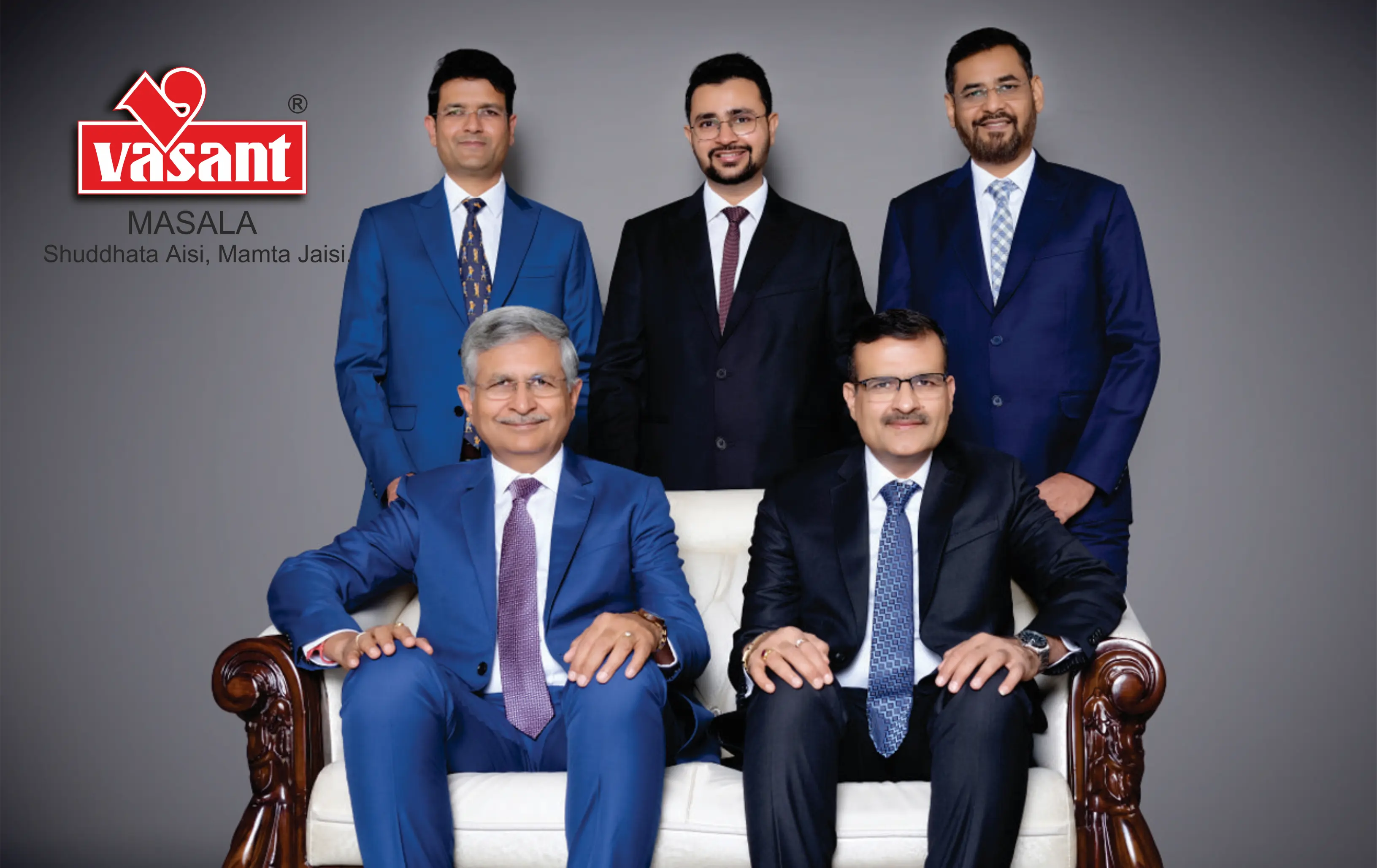
In 1992 the family opened an office in Ahmedabad, and from 1999, Vasant Masala has produced as a private limited company. Bapulalji's four sons are active in it: Chandrakantbhai is chairman and managing director, Omprakashbhai directs finance and human resources, Rajkamalbhai directs sales and marketing, and Ashishbhai directs production and procurement. The third generation has joined too, and Chandrakantbhai's son Nirmitbhai looks after the international market.
Today the company's motto is "Shuddhata Aisi, Mamta Jaisi", meaning purity like a mother's love. Vasant makes more than 80 kinds of masala in over 285 pack sizes. The range covers base spices like chilli, turmeric and coriander, blended masalas such as pav bhaji, pani puri, chole chana and shahi paneer, specialty blends like garam masala, tea masala, hing and pickle masala, and whole spices like tej, laving and elaichi. Packs run from ₹5, ₹10 and ₹20 pouches to 100 g, 200 g, 500 g and 1 kg.
The monthly capacity is 2,400 tonnes, from two ultra-modern plants. The main complex in Ahmedabad-Dehgam covers 2.5 lakh square feet, and includes a world-class research and development centre. Purity is checked at 150 points, and raw material is bought directly from farmers. A sample comes first, and only if the lab approves is the order placed. Low-temperature grinding keeps nutrients intact, and no colours, essences or preservatives are used. Chandrakantbhai says the company cares for the medicinal value of spices, not just their taste, and that the home kitchen is really a pharmacy.
Vasant holds certifications including FSSC 22000, ISO 22000:2018, FSSAI, APEDA, Spice Board of India and Agmark. Its awards include the Asocham Best Promising Food Industries Award in 2015, the Gujarat Brand Leadership Award in 2018, and recognition for excellence in exotic spices and the Pride of India Award in 2022. Vasant is sold in thousands of retail stores and exported to more than 15 countries across Europe and Africa. Rajkamalbhai notes that no Vasant product has ever failed a food department check.
The company employs over 600 people, many of them for two or three decades. In Jhalod, 200 villagers work at the factory, which stays open because there is no other factory in the area. Bapulalji trained local tribal people to work, and his sons say the village's debt will always be repaid. Vasant also gives back through food donation, cow care, education, tree planting, and a regular medicine newsletter for customer awareness.
Chandrakantbhai says the Jain principles taught them to keep a fair price and high quality. The four brothers work in harmony, and the company aims to grow five-fold in five years.