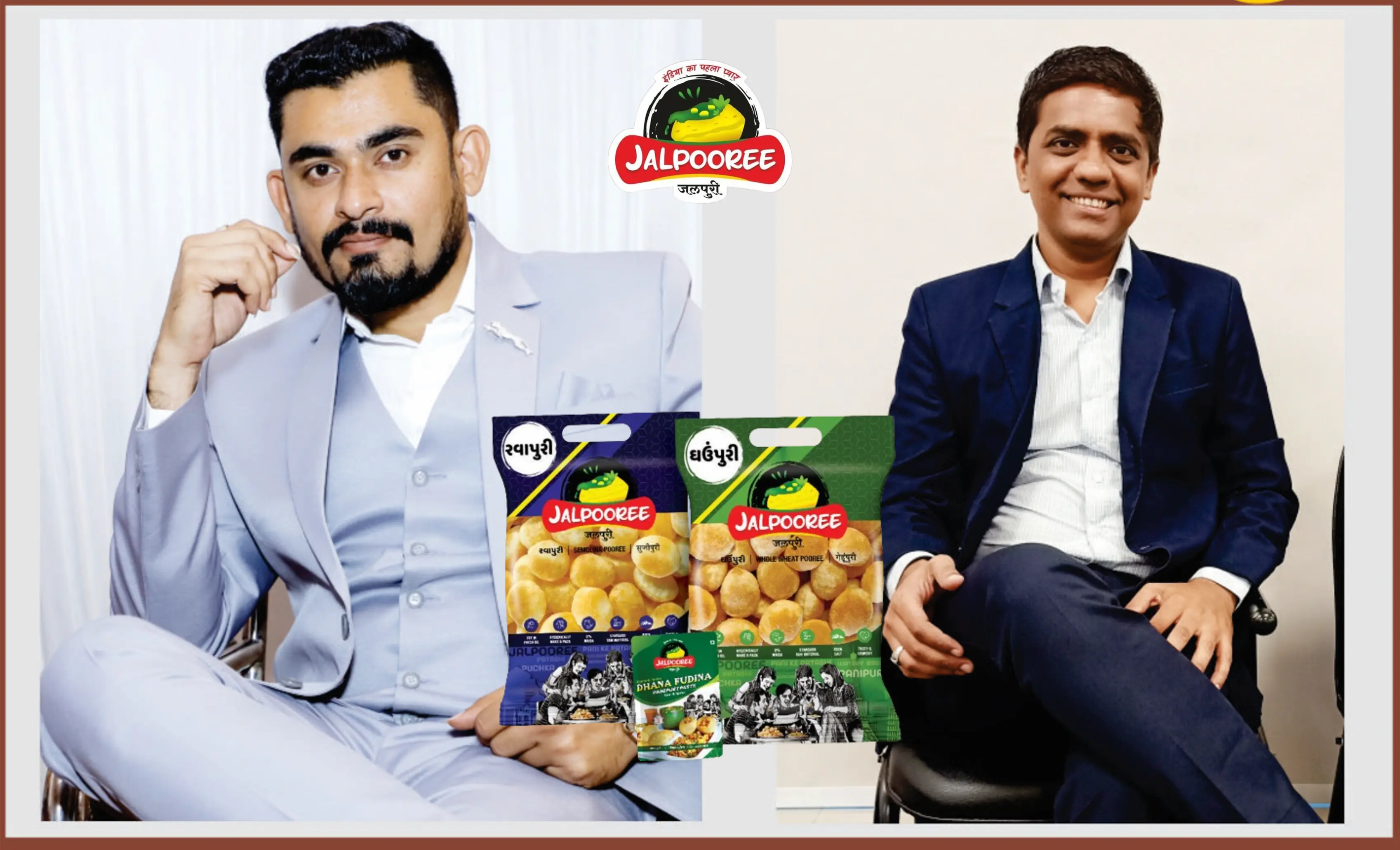
How a bad experience at a pani puri party led two Surat friends to build a hygienic, maida-free puri
A society in Surat was hosting a pani puri party. The tasty jalsa was ready, and two friends went to buy the puris. The bakery had only 10 packets, but they needed 40, so the baker told them to check at the back, where more were being made. What they saw there was enough to turn anyone's stomach: stale flour, black reused oil, unwashed utensils, flour kneaded by foot, sweating workers, a terrible smell, a blocked gutter next door and flies everywhere. The mood for pani puri vanished.
Then a worrying thought came: "Have I been feeding this to my family? Have I never cared about my family's health? Should my children eat such poor pani puri?" The friends told the society that the puris were not fit to eat. This happened about three years before the article was written.
The friends are Alpesh Kathiriya, from Moti Khiloli village in Rajkot district, who worked in textiles, and Jatin Desai, from Pithvajal village in Amreli district, who worked in diamonds. Both were born in Surat and have been close friends since childhood.
They saw that pani puri is Gujarat's most popular street food but is often made in filthy conditions, which is a health risk. They visited many towns and villages and found no better picture. So they decided to give Gujarat the best pani puri. After a lot of research and trials, they rented space in Surat and began making healthy pani puri with just 10 kg of flour.
The challenge was huge. They wanted to make a puri without even one percent maida (refined flour) and deliver it to villages. They decided to use oil by a strict rule and change it regularly, researched a rava and wheat puri recipe, and worked tirelessly to perfect it. Their first name was "Miss Panipuri". Packets cost about ₹5 more than ordinary puri, so traders refused to buy them, and the friends had to keep persuading them. Slowly the puri reached the market. The name felt too big, so they renamed it Jalpooree and registered the brand. When they rented 6,000 square feet to make pani puri, many were surprised, and some even laughed.
Then Covid hit. People became far more aware of food, and demand for hygienic puris shot up. Jalpooree's growth sped up about ten times, with demand from across Gujarat. In a single day, with immense effort, the friends built a second furnace and raised production.
Today an ultra-modern, untouched plant on 6,000 square feet in Surat can make 60 lakh puris in 24 hours. The friends did the machine's R&D and design themselves, and it was ready in a year. They say transport is costly and puris break easily, and that with maida, the puri would have stayed more unbreakable. Jalpooree makes rava puri, wheat puri, and dhana-fudina and khajur-ambli pastes. The puris have 0% cholesterol and 0% maida, are untouched by hand, use fresh oil and are made in a 100% hygienic setup. More than 36 distributors cover Gujarat.
Aayush Kathiriya manages the factory, and sales partners across Gujarat have helped take the brand to the top. The friends' message is "Don't ask for pani puri, ask for Jalpooree". They invite people to visit the plant, plan a manufacturing unit in every metro city, and are looking for dealers and distributors in Gujarat and Maharashtra.