Chandubhai Pipaliya's Paras Enterprise turned five working machines out of 40 into 58 types of food processing equipment
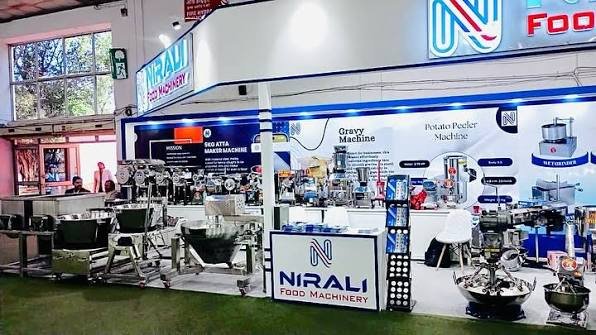
"I don't want to take a job. I want to give jobs." A young man from Khodapipar, a remote village in Saurashtra, made this decision while still in college. He had studied commerce, but his mind ran toward machines. His name is Chandulal Pipaliya, known as Chandubhai, and today his Paras Enterprise in Rajkot is known across India for its "Nirali" brand, a word that means "unique".
Chandubhai was born in 1973, the son of a farmer with a technical mind, and that gift passed on to him. He studied up to Class 10 in his village and became a commerce graduate in Rajkot. While still studying, he built a flour mill with a friend, Dilipbhai. Then he set out to make gravy machines.
The start was a disaster. He built 40 machines, but only five worked and the rest failed. Money trouble became heavy. Many people would have broken down, but Chandubhai did not. With native ingenuity, hard work and sincerity, he kept researching and kept building.
Today Nirali makes 58 types of food processing machines, including dough kneaders, vegetable and chilli cutters, and potato wafer, peeler and dryer machines. About 90 machines are sold every day, and Chandubhai directly supports about 65 families. He has travelled to 22 countries.
His boldest win came in the bowl chopper. Only four manufacturers in the world make this machine, and he is one of them. After two years of deep research, he built a high-quality machine. A lower-quality Chinese machine sells for ₹1.2 lakh, but Chandubhai launched his at just ₹25,000, and it became popular. Why keep the price low despite almost no competition? He says customers' trust and a fair profit are his founding principle.
His secret is simple. Most makers depend on outside suppliers for parts, which affects price and quality. In Nirali machines, nothing comes from outside except nuts and bolts. The company makes all the other parts itself and buys raw material in bulk. A Nirali dough kneader can knead 10 kg of dough in two and a half minutes, a minute faster than other machines, and runs in many institutions, including institutions of the Swaminarayan sect. A household aata maker is also available.
Chandubhai has no serviceman. He knows the technical side of every machine and fixes faults himself, mostly over the phone. He works alongside his workers, eats breakfast with them, reaches the factory at 6 a.m. and is the last to leave.
His wife, Krishnaben, says his hard work is so great that fate has to support him. The names also came from the two of them: she liked "Nirali", so it became the brand, and he liked "Paras", so it became the firm. His next dream is a halwa machine. He admits he is no good at marketing and has never sold a machine himself.
His advice to industry is direct: laziness is the biggest problem, and a business owner must keep working like a craftsman. He also feels 18% GST on food processing machines is too high.
Chandubhai's story shows that native ingenuity can compete with the world.
FS
Food Samachar Desk
Stories, profiles and news from Gujarat's food industry, since 2005.