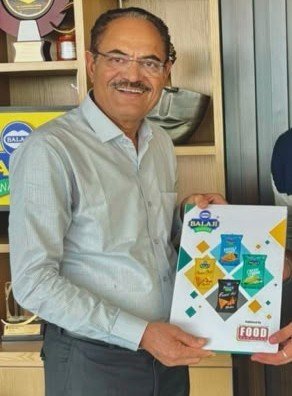
How Chandubhai Virani and his brothers turned a theatre canteen into India's snack giant
In 1973, drought hit Dhunadhoraji village in Jamnagar district. Fields dried up, and a Patidar family that lived off farming faced hard times. The young men of the family, who had planned to go to Surat to learn diamond polishing, instead came to Rajkot, where the owner of the new Astron Talkies asked them to run its canteen.
The brothers, among them Chandubhai Virani, arrived with almost nothing. They spent their first week in Rajkot making do, and when Astron Talkies opened, they took charge of the canteen, selling wafer packets bought from others. From 1974 to 1982, they ran the canteen. Chandubhai recalls that after a day's work he would repair broken theatre seats at night in return for breakfast. They lived in a rented two-room house, where the women of the family, his mother, wife and sisters, made sandwiches for sale during film intervals.
The idea came naturally: why sell others' wafers when they could make their own? In 1982 they began making wafers at home in Rajkot, after selling their village land. Working day and night, they built the business, running two pans by 1989. In 1992 they installed an automatic machine, but the machine company shut down, and six months of business was lost. The family worked through it by learning to repair the machine themselves. That crisis, Chandubhai says, made them engineers.
Brothers Bhikhubhai and Kanubhai stood beside him all the way. Today Balaji Wafers Pvt. Ltd. runs three factories, at Wajdi near Rajkot, Valsad and Indore, each on about 50 acres. Together they can make 18 lakh kg a day. The company employs about 5,000 people, works with 1,500 raw material suppliers and 800 dealers, and sells in 10 states through over 10 lakh shops. Turnover is ₹2,000 crore.
The range includes about 25 wafer and namkeen items, from simple salted, masala masti and tomato twist to chat chaska, cream-onion and chilli tadka, plus farali chevda, rajwadi chevda, Gippy noodles and pop rings. Chandubhai says Balaji never compromised on quality and never set targets. Growth came faster than anyone imagined. The company has also brought out low-oil products.
The Balaji name came from the Balhanuman temple inside Astron Talkies. The family also gives back. It runs a modern gaushala with about 125 Gir cows, and gave jobs to 20 women in Valsad who had been arrested for selling liquor out of desperation. A trained group now works in the Balaji factory.
Chandubhai's own story is humble. He grew up barefoot in the village, eating peanut-jaggery for breakfast. Today he starts at 6:30 a.m. with lemon-honey water from his wife, Damayantiben, works from 10 a.m. and heads home by 5 p.m. to play with his granddaughter. Even today, he says, he does not feel like a businessman. He sets no targets for his staff and only teaches them responsibility. He is also candid on tax. The business once paid none and now pays 12%. He believes tax revenue should go back into business growth.