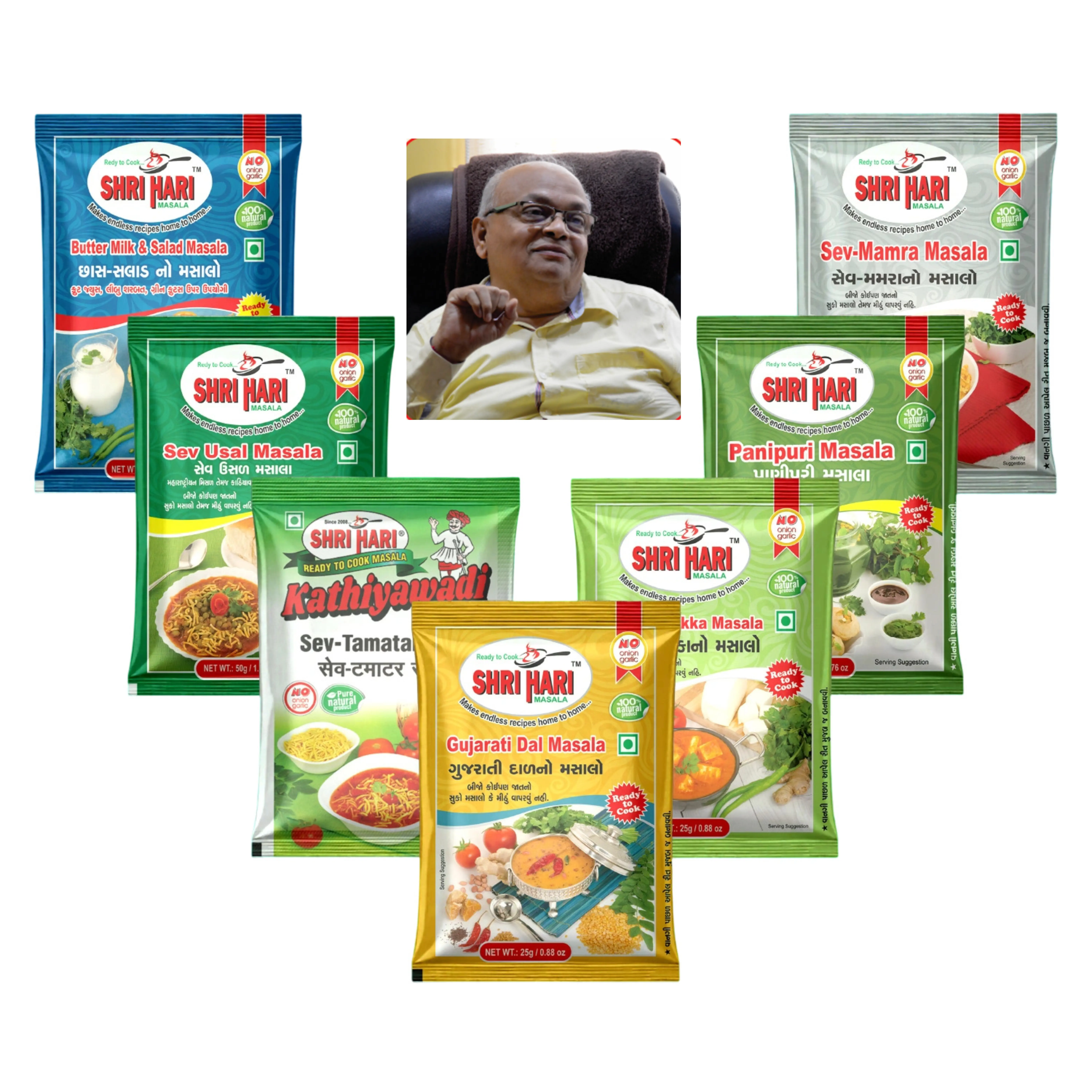
How Balkrishnabhai Gandhi turned a life-changing accident into a ready-to-cook spice brand
On 27 February 1991, Balkrishnabhai Gandhi, then 33 and in a senior job at a multinational company, was riding in a company car on a highway when a sudden accident changed everything. His body was crushed, and one leg had to be amputated on the spot. Thirteen surgeries and about a year and a half of total bed rest followed.
His company offered sympathy and a safe job, but he did not want a life of pity. Though his body had suffered, his mind stayed firm. He decided to do business. Accepting what nature had dealt him, he moved to Halol from Vadodara and took agencies of well-known companies. Forgetting his lost leg and his weakened body, he worked day and night with crutches and a will of iron, handling everything from management to marketing.
Balkrishnabhai belongs to a Vadtal Swaminarayan family. His father, Indravadanbhai, was a well-known trader of dry red chillies in Vadodara. When the father died suddenly, the sons were young and the business could not be kept. Balkrishnabhai and his brother Harikrishnabhai took part-time jobs in grocery and cloth shops and studied. Both brothers eventually found jobs, and Balkrishnabhai built a career, until the accident struck.
He ran the agency until 2005, then thought of making his own products. Research was extensive. In 2008 he launched Shree Hari Masala. Today a factory stands on 21,000 square feet at Pratappura industrial area, near Halol, making 52 types of spice blends on a "ready to cook" theme. A network of 106 dealers covers Gujarat, and 2 tonnes of masala are produced daily. Turnover is about ₹11 crore.
The range includes puri chevda masala, nylon pova masala, dabeli, pav bhaji, samosa, batata vada and panipuri masala. Packs come in 15 g, 50 g and 100 g pouches, and 200 g and 500 g jars. There are no onion or garlic blends. Each packet carries a recipe, so you can cook just as printed. Raw material is lab-tested, and the company spends about ₹2 lakh a month on testing. It uses Tata salt and Peri sugar. Hotel chefs are called in to taste each blend, and shelf life is 12 months.
Balkrishnabhai tastes every spice himself. His brother Harikrishnabhai runs the factory and production, which is fully automatic, and most of the 30 staff are women. His wife, Indubenla (Ankitaben), has been a pillar of strength.
Faith guides the brand. A revered guru once advised him not to put anything harmful in masala and to stay away from non-veg, garlic and onion, and he has followed the advice. The factory begins each day with a puja of Swaminarayan, plus chanting.
Shree Hari Masala won the Divya Bhaskar Eminence Award in 2019 for fast growth, presented by Deputy Chief Minister Nitinbhai Patel. Eight new masalas are on the way. Balkrishnabhai is also fond of Saurashtra's flavours, and has a special plan to reach every taluka there.