From a hand-pulled kulfi cart to 75,000 litres of ice cream a day
In Savarkundla, a small Saurashtra town, the Gohel family's head, Arvindbhai, worked as a labourer to feed four brothers' families. In drought years he took relief work. Together with his brothers Chandubhai and Jayantibhai, he tried fruit and panipuri, and took up labour when business failed. Nothing seemed to settle until one day he thought of making kulfi.
In 1980 the family bought a second-hand kulfi plant from Surat for ₹16,000, borrowing the entire amount at interest. Then the machine broke down, gas leaked and the family had no money for repairs. They called a technician from Surat, and the women of the family even pledged their jewellery. At last the machine ran, and the business began. Arvindbhai, a carpenter by trade, made about 20 carts himself at night to sell kulfi across Savarkundla.
His son Prakashbhai, now managing director (born 10 November 1974), studied up to Class 10 and learned pump repair. After school he opened a repair shop and saved a little each day. He then partnered with a friend to place freezers in shops, supplying kulfi and ice cream. Soon freezers stood at 10 places, and the family's business grew. His father had not wanted his sons to join the exhausting kulfi trade, but once he saw the freezer business bring steady returns, he gave his blessing.
By 2005 he had saved ₹4 lakh. With it and a bank loan, he bought 880 square yards on Mahuva Road and installed modern machinery, launching the Ajanta brand. Younger brothers Vijaybhai, Rasikbhai, Rameshbhai and Nileshbhai joined, each taking charge of a department.
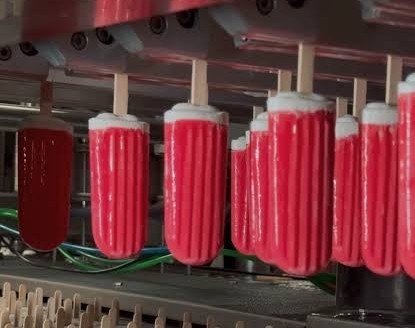
Ajanta now has capacity for 75,000 litres a day and makes over 100 varieties of ice cream, candy, cones, Jamreli lachhi and shrikhand. A ₹5 ice cream cup comes in three varieties, 90 ml cups cost ₹10 to ₹15, and cones range from ₹10 to ₹50. Ajanta is also known for mango pulp under the Yamuna brand, and for shrikhand in flavours like elaichi, mango and American dry fruit, all made by the women of the Gohel family.
The family itself is the secret. 41 members, 25 of whom share a single kitchen, work as a team, and every member visits the family deity, Butbhavani Mata, each morning. At the peak season 150 workers are employed, and in winter laid-off workers still get half pay at home. Arvindbhai taught the family never to cheat, and keeps an old aluminium kettle as a reminder that it was once their only capital.
Prakashbhai says Ajanta has grown without a single salesman, and relations with distributors go back decades. A new plant on 10 vigha will raise production tenfold. Ajanta plans to become a private limited company by 2020, and later a limited company.
The Gohel family proves that a strong joint family can build a thriving business.