How a Rajkot fruit-cart family turned a rented room into a snack empire
In 1982, a Raghuvanshi family in Rajkot sold fruit from a cart to make ends meet. Naranbhai Khakhar decided to leave the cart behind and try his luck in farsan. In a tiny rented room in Kotak Sheri, with one bag of flour, three tins of oil and a single Primus stove, he began making six items, including sev and ganthiya. His wife, Hasumatiben, backed him fully, and Naranbhai even took a job on the side to keep the household going.
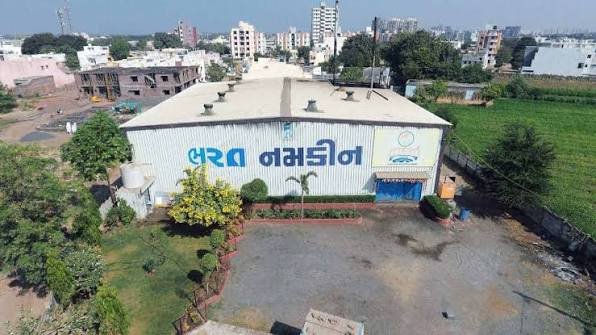
The family named the business after their eldest son, Bharat. The early years were hard, but the couple worked day and night and kept the business alive. After finishing school, sons Bharat and Hitesh joined, and in 1991 they opened a shop in Kotak Sheri. Wholesale followed. Today Bharat Namkeen has a factory on 13,000 square feet along Jamnagar Road highway in Rajkot, producing about 4,000 kg of farsan a day, with capacity for 7 tonnes. Turnover is ₹5 crore.
Bharat Namkeen now offers more than 110 varieties. There are 30 kinds of special chevda, including Kashmiri, Panchratan, pova, Mangalori mix and Madrasi, along with 12 kinds of sev-ganthiya and the family's famous nylon sev, a product of 30 years' skill. Sweet and sour bites in mango, strawberry and choco flavours, as well as jini bundi, round out the range. Two new items launch each month, and ten more, including banana sev, Munchurian bhel and chocolate chevda, are coming.
Quality is non-negotiable. The farsan uses first-grade besan and good oil, no artificial colours and no preservatives, and it stays fresh for about two months. Hiteshbhai says they cut packing costs to keep prices fair. The plant runs on in-direct heating, and about 50 experienced workers keep production smooth.
The reach is wide. Over 350 traders in Rajkot alone sell Bharat Namkeen, and the family runs six of its own retail outlets. The farsan travels across Gujarat, Rajasthan and Madhya Pradesh, and is exported to the U.S. In 2000, raw material prices spiked suddenly, and the family took a loss for nearly a year, but never stopped supplying customers on time.
Bharatbhai runs the Kotak Sheri store with his son Tejas, an MBA, while Hiteshbhai manages the factory. Their wives, Mitaben and Jasminaben, are devout and serve Thakorji daily. Hiteshbhai's daughter Kinal is a Kathak dancer. The family also helps with education and health, and serves snacks to children at Navratri.
What's next? Twenty retail outlets in Rajkot, a wholesale push, and a plan to move to a three-acre plant by 2028. The family is planning to become a limited company and bring an IPO, with a 20-year goal of ₹1,500 crore turnover.
The Khakhar family shows what steady work and a good recipe can do. A single stove became a mountain of taste.