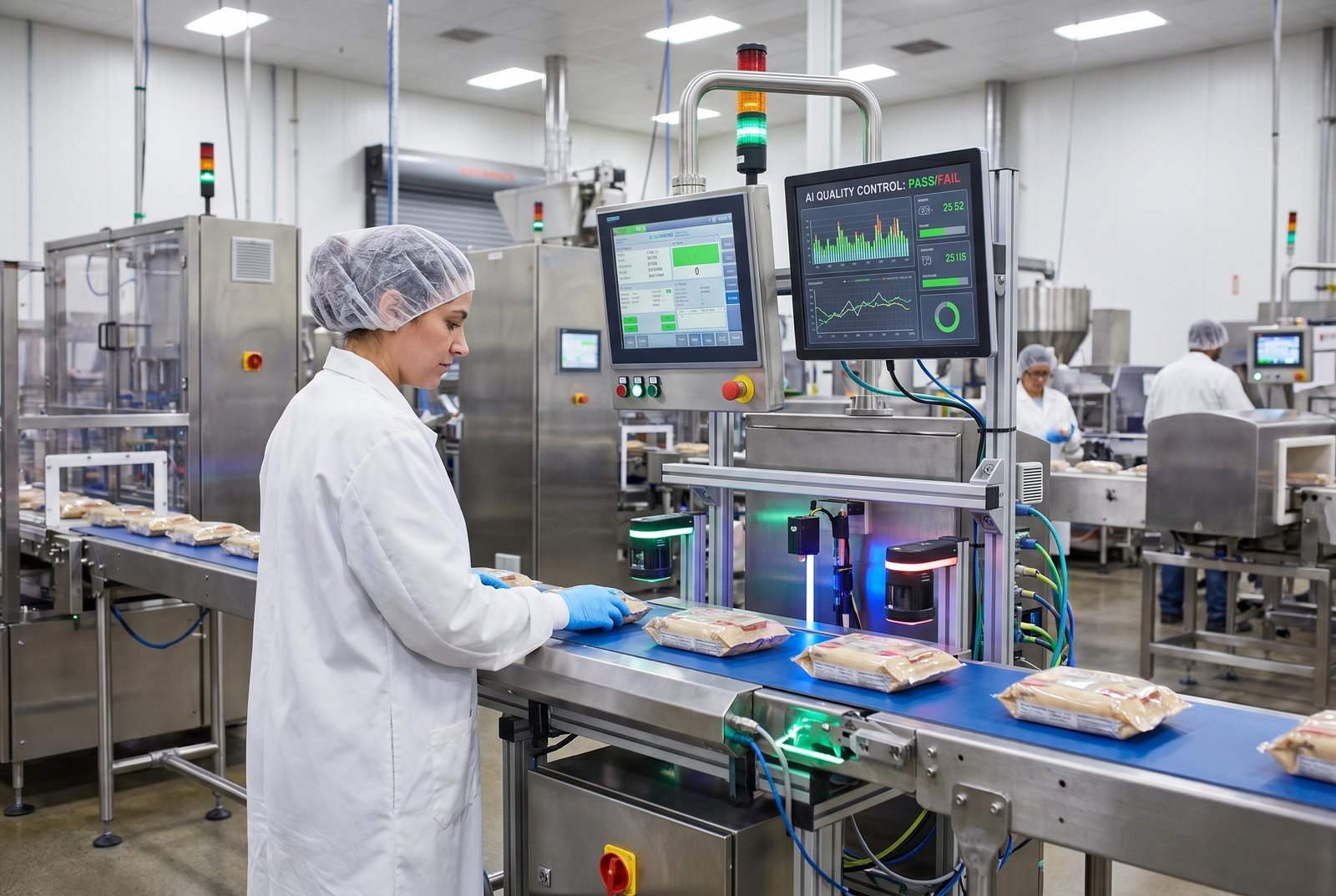
Technology is becoming an increasingly important part of food manufacturing, with artificial intelligence (AI), automation and digital monitoring offering new ways to manage production and improve operational efficiency.
A report covered by Business Standard in July 2026 identified AI and quick-commerce platforms among the factors influencing the development of India's food processing sector. Applications of AI include demand forecasting, quality assessment, warehouse operations and production planning.
Industry News - Business Standard
How AI can support food manufacturers
One application is demand forecasting. By analysing historical sales and ordering patterns, suitable systems can help businesses estimate future requirements and plan production more effectively.
Automation can also support repetitive production activities, packaging operations and warehouse movement. Digital quality-monitoring systems may help identify inconsistencies earlier in the manufacturing process.
These technologies are not limited to large factories. Smaller enterprises can begin with relatively simple tools for inventory tracking, production records, sales analysis and equipment maintenance scheduling.
Investment should follow business needs
Technology adoption requires more than purchasing equipment or software. Businesses must consider implementation costs, employee training, maintenance, data quality and compatibility with existing operations.
For smaller manufacturers, the most practical approach may be to identify one recurring operational problem and evaluate whether a digital solution can address it.
Industry takeaway: Food manufacturers can gain more value from technology when they focus on measurable improvements in consistency, waste reduction, production planning and resource utilisation.